When 78-year-old Brisbane resident Harold Bennett renewed his driver’s licence this year, he wasn’t expecting any changes.
Instead, he received a conditional licence allowing him to drive only during daylight hours.
“I didn’t lose my licence,” he said. “But it’s different now.”

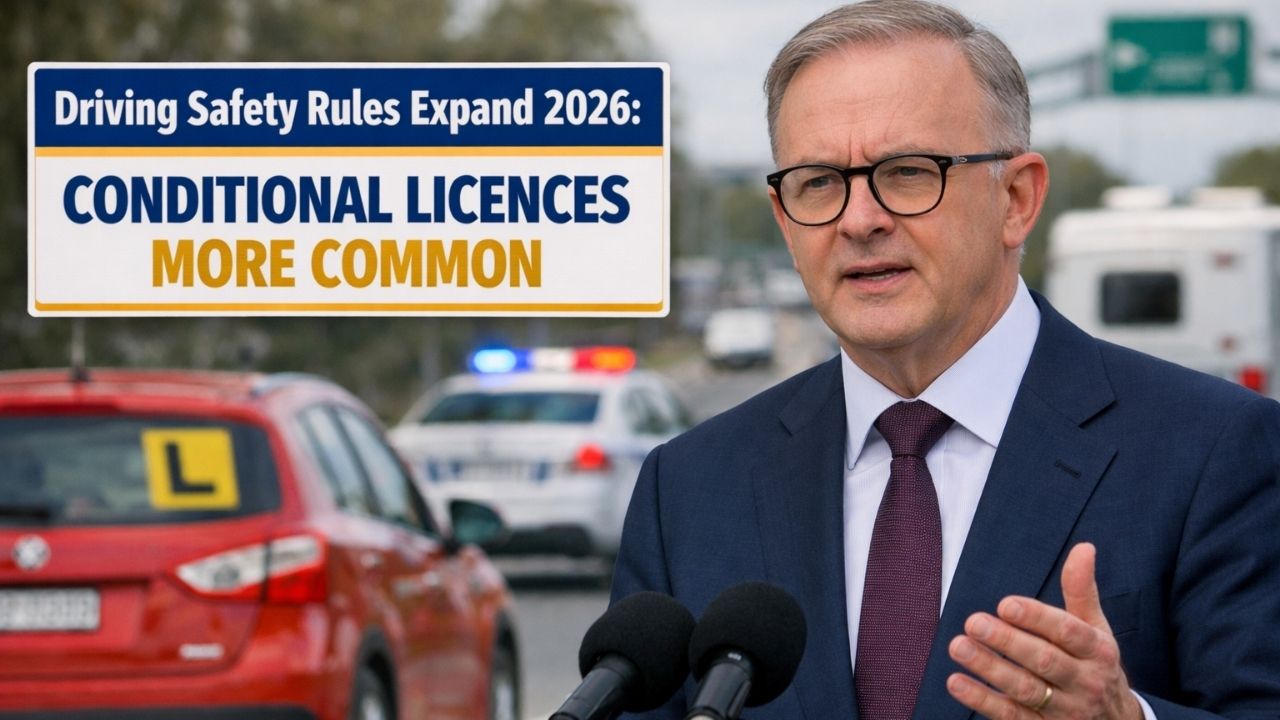
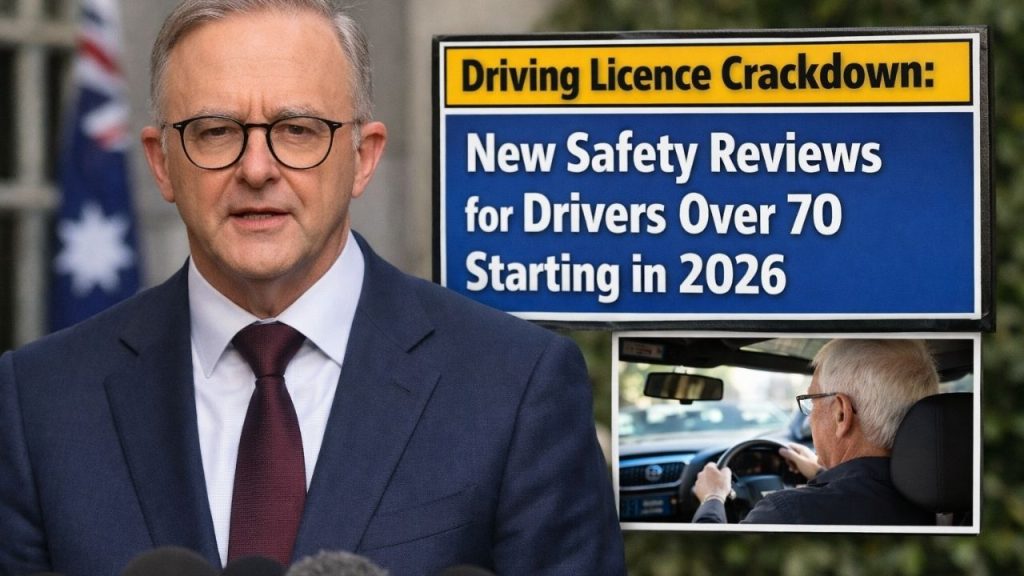
In 2026, driving safety rules across several Australian states are expanding, with conditional licences becoming more common — particularly for older drivers and those with certain medical conditions.
The aim is to balance independence with road safety, but for many seniors, the new rules represent a significant shift in how mobility is regulated.
Here’s what the expanded 2026 driving safety measures mean — and who they affect.
What’s Changing in 2026?
Across multiple states, road authorities are:
- Increasing medical review frequency for senior drivers
- Expanding use of conditional licences
- Strengthening reporting requirements for certain health conditions
- Encouraging earlier intervention when risks are identified
Conditional licences allow drivers to continue operating vehicles, but under restrictions such as:
- Daytime driving only
- No freeway driving
- Geographic limits
- Lower speed zone restrictions
The rules vary by state, but the broader trend is clear: more tailored conditions instead of outright cancellations.

Why Conditional Licences Are Increasing
Authorities cite several reasons:
- An ageing population
- Higher numbers of drivers aged 75 and over
- Medical advancements allowing longer driving lifespans
- Improved risk assessment tools
Rather than removing licences entirely, regulators are using conditional restrictions to:
- Maintain independence
- Reduce accident risk
- Address specific medical concerns
This approach is seen as more balanced than blanket bans.
Real Story: “I Can Still Drive to the Shops”
Harold underwent a routine medical review.
His eyesight had slightly declined.
Instead of losing his licence, he received a condition:

- No driving after sunset.
“That’s fine,” he said. “I don’t like driving at night anyway.”
For many seniors, conditional licences are a compromise.
They preserve autonomy while addressing safety risks.

Who Is Most Affected?
Drivers more likely to receive conditional licences include:
- Those aged 75+ (depending on state rules)
- Individuals with vision impairments
- Drivers with cardiovascular conditions
- Those with early cognitive decline
- Drivers recovering from stroke or surgery
Medical practitioners play a key role in assessments.
Comparison Table: Standard vs Conditional Licence
| Feature | Standard Licence | Conditional Licence |
|---|---|---|
| Driving hours | Any time | Restricted |
| Geographic limits | None | May apply |
| Medical review | Standard cycle | More frequent |
| Renewal period | Longer | Often shorter |
Conditional licences are personalised rather than automatic penalties.

Do These Changes Apply Nationwide?
Driving regulations are state-based.
However, in 2026, many jurisdictions are:
- Aligning policies more closely
- Increasing frequency of medical reviews
- Emphasising conditional over cancellation models
The broader trend is national, even if details vary.

Why Safety Is a Priority
While older drivers are generally cautious and less likely to engage in high-risk behaviours like speeding, age-related conditions can affect:
- Reaction time
- Vision clarity
- Cognitive processing
Statistics show that per kilometre driven, serious injury risk increases in older age groups.
Conditional licensing is intended to reduce that risk without unnecessarily removing mobility.
Are Seniors Losing Licences in Large Numbers?
No evidence suggests mass licence removals.
Instead, authorities report:
- A gradual rise in conditional licences
- Increased compliance checks
- More structured review systems
The focus is risk management, not widespread cancellation.
Concerns Among Seniors
Some older Australians worry about:
- Being unfairly targeted due to age
- Losing independence
- Rural isolation if restricted
- Increased reliance on family transport
In regional areas, public transport alternatives are often limited.
This makes licence conditions particularly sensitive.
What Drivers Should Do
Here’s what you need to know:
- Book medical reviews early before renewal deadlines.
- Bring updated medical records to appointments.
- Understand specific licence conditions clearly.
- Ask about appeal processes if concerned.
- Explore community transport options if restrictions apply.
Preparation reduces anxiety.
Q&A: Driving Safety Rules 2026
1. Are seniors banned from driving?
No.
2. What is a conditional licence?
A licence with specific restrictions.
3. Who decides the conditions?
Road authorities based on medical advice.
4. Do all drivers over 75 get restrictions?
No, only if medically indicated.
5. Are reviews more frequent in 2026?
In many states, yes.
6. Can I appeal a decision?
Yes.
7. Does this apply to commercial licences?
Often stricter rules apply.
8. Are younger drivers affected?
Primarily seniors or those with medical issues.
9. Is this about revenue?
No, about safety.
10. Do conditions last forever?
They may be reviewed periodically.
11. Can conditions be lifted?
Yes, if medical status improves.
12. Is this nationwide?
State-based but widespread.
13. What’s the key takeaway?
Conditional licences are becoming more common in 2026.
In 2026, Australia’s approach to senior driving is evolving.
Rather than sweeping bans, regulators are expanding conditional licensing to maintain a balance between independence and public safety.
For drivers like Harold, the new rules represent adjustment — not exclusion.
As Australia’s population ages, personalised driving conditions may become the norm, ensuring seniors can stay mobile while roads remain safe.








Leave a Comment